Loading this trade…

Loading this trade…
Preview
You install and fix electrical wiring and equipment in homes, shops, and larger buildings.
You do not need to answer the questions to read this page.
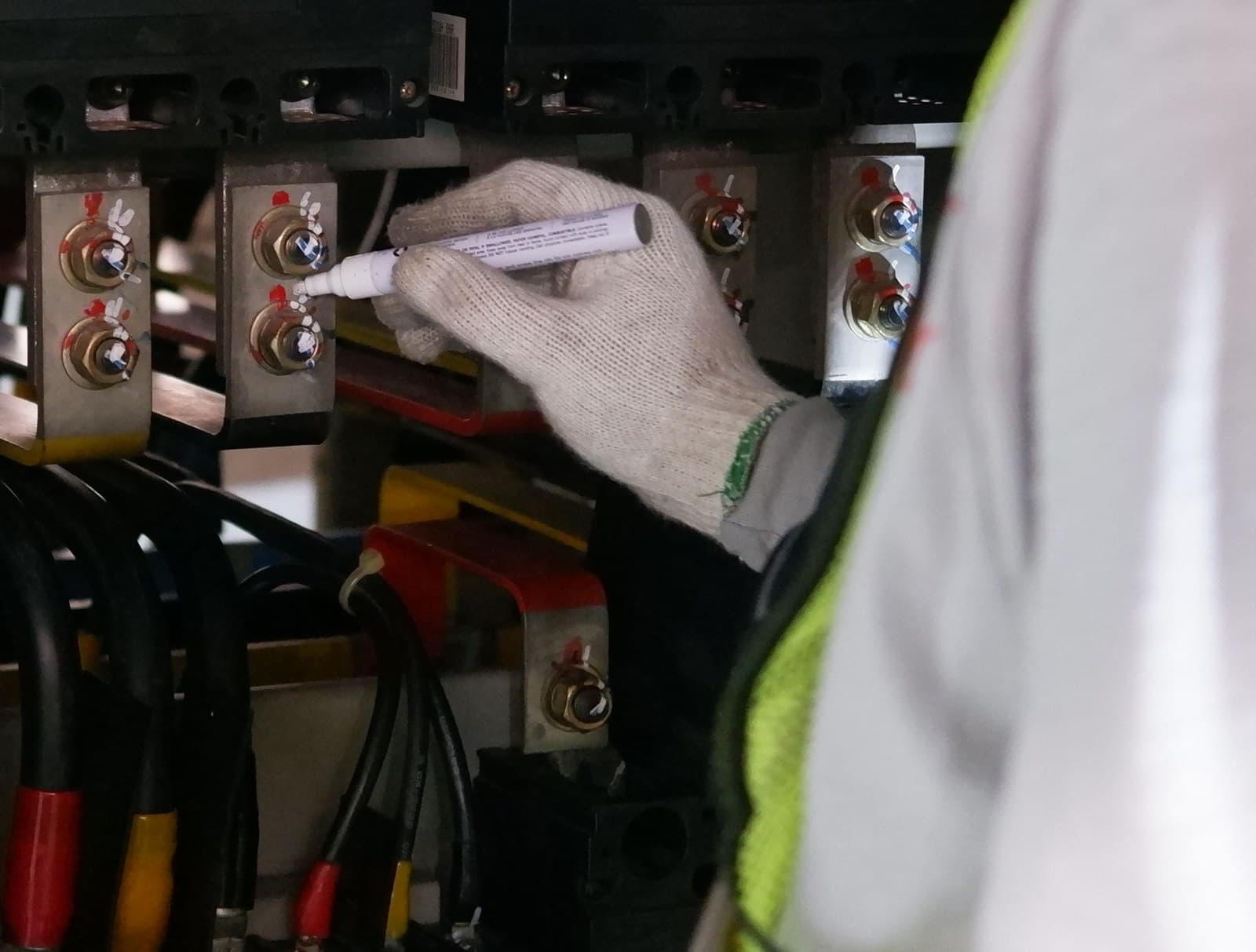
The national qualification describes this work as selecting, installing, setting up, testing, fault finding, repairing and maintaining electrical systems and equipment in buildings and premises.
Source, checked 17 October 2026: training.gov.au, UEE30820.
A day often starts with a van or a leading hand on site. The job might be a new house, a shop fit-out, or a fault call. You read a plan, run cable, fit equipment, connect switches and outlets, and test that the circuit is safe.
Some weeks are new building work, repeating similar tasks from house to house. Other weeks are maintenance, one address after another. The sketch blends those. It does not say which one an apprentice in your state would actually get.
This is a composite sketch so you can picture the work. It is not a diary from one workplace, and it is not a survey result.
The award's ordinary hours are an average of 38 a week. Day workers work Monday to Friday, between 6 am and 6 pm. Work outside ordinary hours is paid at higher rates, which are listed in the pay guide.
Source, checked 17 October 2026: Electrical, Electronic and Communications Contracting Award (MA000025).
These are award minimums, not what any employer is sure to pay. Each figure is an hourly rate that applies from the first full pay period starting on or after 1 July 2026. From the Electrical, Electronic and Communications Contracting Award. Check the current pay guide on the Fair Work Ombudsman website before you rely on a figure.
1st year
$16.39 an hour if you did not finish Year 12. $17.97 an hour if you did.
2nd year
$19.55 an hour if you did not finish Year 12. $21.13 an hour if you did.
3rd year
$22.71 an hour.
4th year
$26.50 an hour.
Apprentice table, started after 1 January 2014, not an adult apprentice. Adult apprentices and apprentices who started before 1 January 2014 have different tables in the pay guide. These apprentice rates already include some allowances, as the pay guide explains. Other allowances can change the total, so read the pay guide for your award.
Once qualified: the award's base rate for an Electrical worker grade 5, the grade for a worker with an electrical trade certificate, is $29.45 an hour before allowances (award clause 16.2). The pay guide shows a higher figure for this classification because it adds allowances. What a person is paid depends on the employer and any agreement.
Source, checked 17 October 2026: Fair Work Ombudsman pay guide, MA000025, published 7 August 2026; Electrical, Electronic and Communications Contracting Award (MA000025).
Qualification: Certificate III in Electrotechnology Electrician, code UEE30820. It is current on training.gov.au.
Length: Queensland's register lists a nominal term of 48 months, which is the length written on the training contract. Other states and territories can differ. School-based apprenticeships are listed there too.
Licence: the qualification says this work needs a licence or permit when it is done on electrical installations above 50 volts a.c. or 120 volts d.c. In most jurisdictions the qualification has to be completed as an apprenticeship or through the Trades Recognition Australia pathway. Check the licensing rules where you live.
Pre-apprenticeships are not covered on this page.
Source, checked 17 October 2026: training.gov.au, UEE30820; Queensland Training Information Service, UEE30820.
Not from a survey. This is a first draft for review. Replace it with sourced comments, or remove it.
Preview
After a trade, an apprenticeship needs a training provider for the study and an employer for the paid work. Here is a starting list for your state or territory.
Choose a state or territory to see a starting list. Nothing you choose here is saved or sent.
Open the pathways page